Aged 15, Merseyside developer launches Ident Group Ltd with his father serving as director
Callum Delaney founded Ident.ink and runs its development. UK law says directors must be 16, so his dad signs the paperwork.
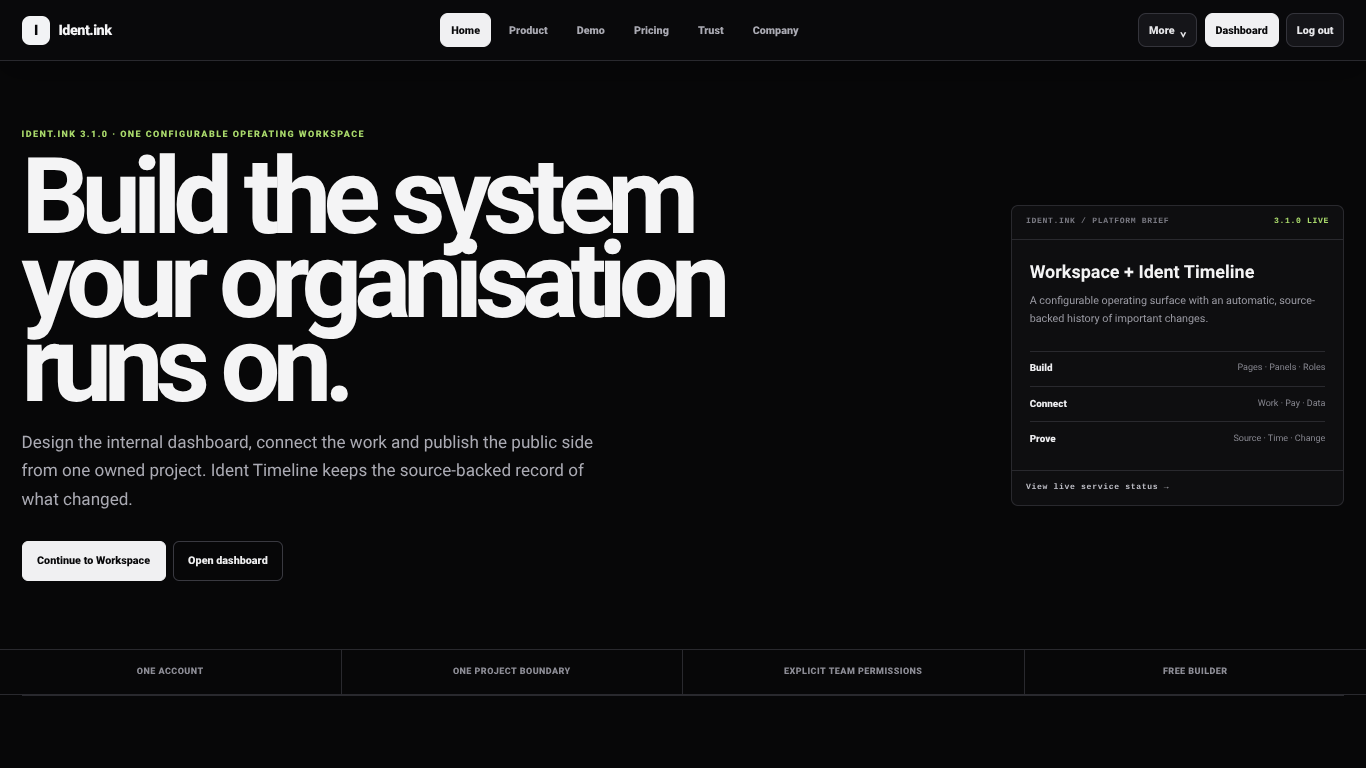
Callum Delaney is 15. He is the founder and head developer of Ident.ink, a software platform operated by Ident Group Ltd.
He cannot be a director of it. UK company law sets the minimum age at 16, so his father holds the registered director role while Delaney leads the technical direction.
The company was incorporated on 10 August 2026, according to Delaney's account to the news desk. That moved Ident.ink from a personal project into a limited company.
The project did not begin as a business. Delaney says he was building software independently because he enjoyed it, during a difficult period for his mental health.
The gap he describes is a familiar one for anyone young and self-taught. Being able to build software and being able to prove it to other people are separate problems.
A work-experience placement at ProperGeeks in Wallasey supplied the proof. Delaney was asked to build an internal database and management system intended to replace parts of a paper-based process.
The database did not become the permanent solution. He rates the experience more highly for that, calling it real development rather than a portfolio piece.
The work led to paid employment as a software developer at a hardware store, on his account. That gave him external evidence, and gave his family something more convincing than a teenager saying he could code.
A larger opportunity involving a university then came close and fell over. Delaney says Ident lacked the company structure and commercial requirements the deal needed, and he could not fund one of the certifications involved.
That failure is what produced the incorporation. The technology was not the constraint; the absence of a business around it was.
Ident.ink is pitched at businesses, organisations, creators and projects rather than consumers. It groups communication, identities, workflows, development tools and hosting so an organisation does not assemble a dozen unrelated services.
Delaney offers one metric: 424 of 424 production routes successfully verified. He says verification evidence and platform test results are available on request, with public platform information published on the company's trust page.
He is candid that the other numbers are small and the company is very young. He says he would rather state that than manufacture a graph pointing vertically upwards from the day the domain was registered.
There is a lesson here for older founders with better funding. Delaney lost a deal not because the product failed a technical test but because the corporate wrapper — the entity, the certification, the commercial terms — did not exist when a serious counterparty asked to see it.
Incorporation is cheap. Discovering you needed it mid-negotiation is not.
More: Ident.ink · the platform's trust page