Chiswick startup signs US government deal on nuclear cargo ships
Core Power has a first-of-its-kind agreement with the US Maritime Administration, $200m from three Japanese conglomerates and a 2028 target for its first propulsion systems. None of the shipbuilding will happen in Britain.
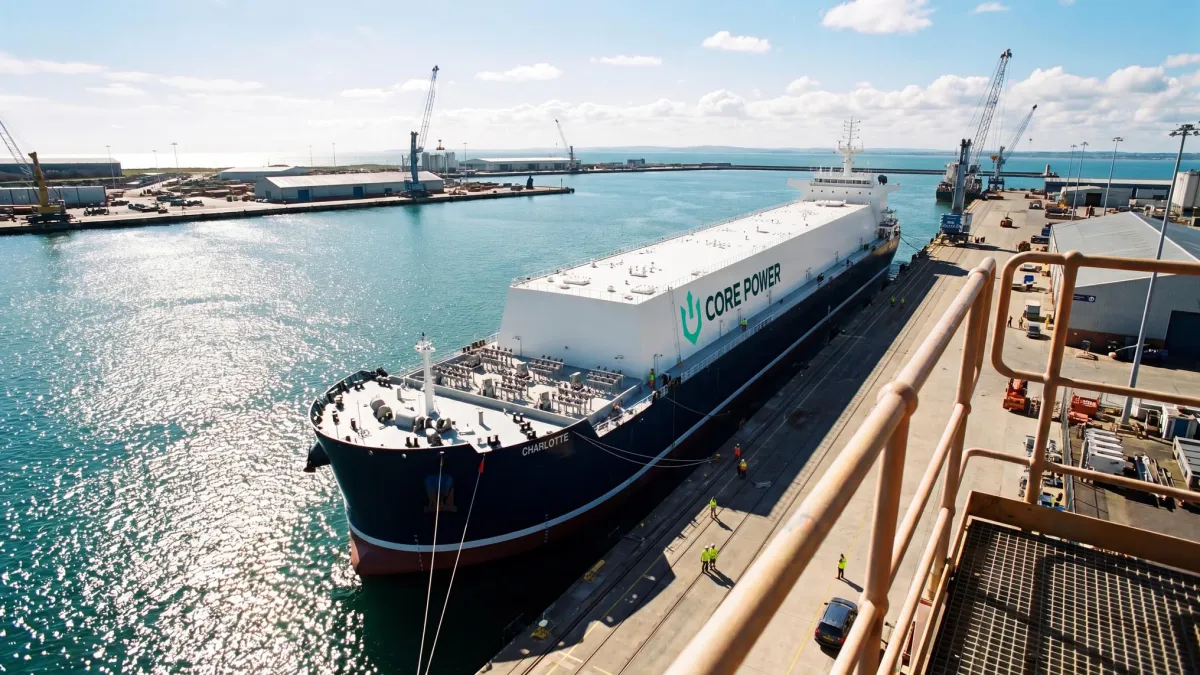
Core Power, a company based at Chiswick Park in west London, has signed a public private partnership with the US Maritime Administration. The agreement was signed in Washington DC on Monday and is the first of its kind.
The stated aim is to speed up construction of a US-flagged fleet of nuclear-powered merchant ships, and to rebuild an American shipbuilding industry that has lost ground to cheaper Chinese yards.
Core Power says it has raised $200m from backers including Mitsui, Mitsubishi and Sumitomo, three Japanese conglomerates, to develop the reactor technology.
It is targeting first construction of its nuclear propulsion systems in 2028. Traditional shipbuilders will build the hulls.
The company was founded in 2018 by Mikal Boe, a Norwegian shipping and commodities executive. In 2024, the most recent year for which accounts are available, it recorded an operating loss of £19.4m and employed 41 people.
Its British arm, Core Power (UK) Ltd, is registered at an address on Chiswick High Road and last filed accounts made up to 31 December 2024, according to Companies House.
The deal follows an initiative launched in May by Sean Duffy, the US transportation secretary. The Maritime Administration, the US Coast Guard, the Nuclear Regulatory Commission and the Department of Energy issued a request for information on small modular reactors for commercial shipping. That call closed on 5 August.
Stephen Carmel, administrator of the Maritime Administration, said the framework "ensures that the United States leads the world with a secure US-flagged fleet". He also said nuclear propulsion "must be approached as a complete system: safe, secure, licensable and investable".
Nuclear power has run military submarines for decades but has never taken hold in commercial shipping, because of build costs and safety concerns. Russia, through its nuclear icebreakers, operates the largest nuclear shipping fleet.
Boe estimates that nuclear-powered vessels could travel up to 75 per cent faster than fossil-fuelled ships, carry more cargo and avoid environmental taxes. Those are his figures, and they describe ships that do not exist yet.
The US government said it would work with Core Power on an "actionable commercial pathway", including clarity on how insurance for nuclear-powered ships would work.
For a British founder, the shape of this deal is the interesting part. The ships will be US-flagged, the hulls will be built in American yards and the jobs will follow the steel; what stays in west London is design work and intellectual property.
That is the familiar route for UK deep-tech: sell the engineering into someone else's industrial programme rather than build the programme here. It also means the near-term test is regulatory, not technical. Until insurers, flag states and port authorities agree how a reactor at sea is licensed and covered, no cargo owner can plan a route around one.
There is a hiring squeeze in it too. Britain's compact reactor projects are already competing for the same fabrication and licensing skills a maritime reactor programme needs, which favours suppliers that get qualified early.