Nexterity's bolt robot fits in a Pelican case and turns four at once
A former ExxonMobil engineer has built a battery-powered robot that tightens pipe flange bolts, and wants to rent it out like a cherry picker. The trades, not the warehouses, are the target market.
Lindsey Elliott spent years at ExxonMobil as an engineer and planner, thinking about the infrastructure that moves oil, gas and petrochemicals. She settled on bolts.
Specifically the bolts in bolted flange joints, which hold sections of pipe together. Loosening and tightening them is heavy physical work, and Elliott says it is the source of many pipefitters' injuries.
Her startup, Nexterity, has built a remote-controlled robot to do that part of the job.
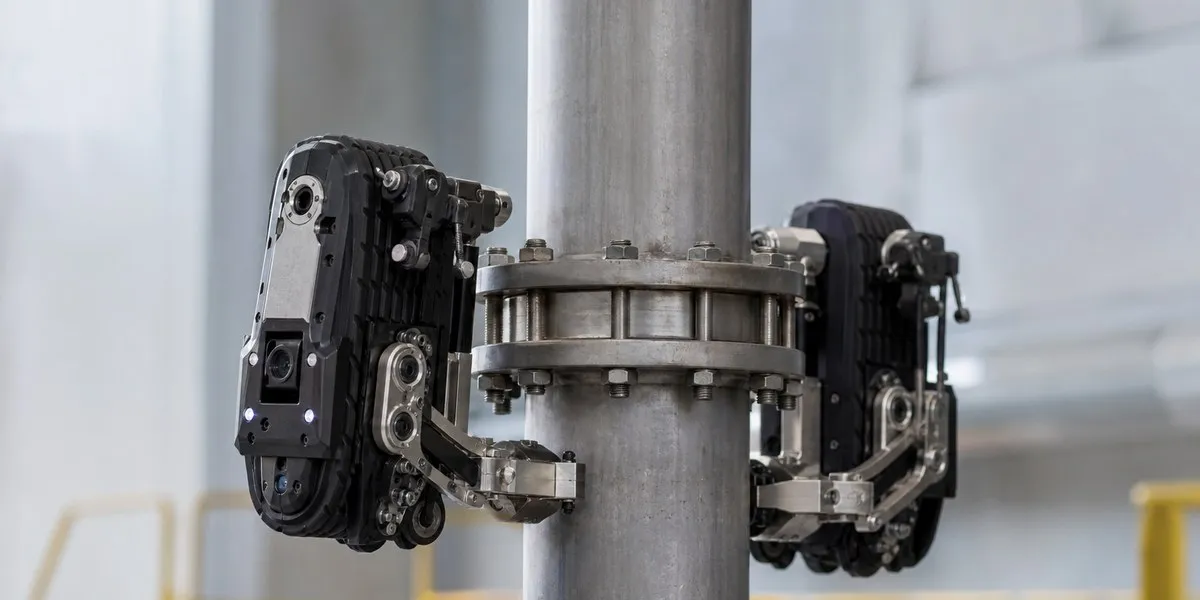
The machine comes in two pieces that clamp around a pipe. It runs on batteries, slides along the pipe once attached, and loosens or tightens four bolts at a time.
Nexterity has built several configurations to fit standard pipe sizes. Elliott says all of them are small enough to fit in a Pelican case and be carried by one worker.
That is not an aesthetic choice. The business model is rental, in the manner of construction plant, so a unit has to travel to a site in the back of a vehicle rather than on a flatbed.
The design came out of conversations at the Bolting Symposium, now in its thirteenth year, and with members of the Pressure Vessels and Piping Division of the American Society of Mechanical Engineers.
Elliott's account of what those conversations produced is a sizing argument. She says 80% of pipes are between two and eight inches in diameter, the range the trade calls NPS2 to NPS8, and that repeatability on that scale makes the job a good candidate for automation.
The labour case sits alongside it. Elliott says pipefitters she has spoken to across the United States and Canada describe North American pipefitting productivity as notoriously low, and that the industry, like other trades, is short of people.
The customer list she describes is wider than oil and gas. Water, wastewater, water treatment, food and beverage, mining, nuclear and sustainable manufacturing plants all run the same kind of piping, she says.
Nexterity is one of the Startup Battlefield 200 selected for TechCrunch Disrupt.
For founders eyeing robotics, the interesting part is the shape of the bet rather than the hardware. Nexterity is not chasing a general-purpose machine; it is automating one repetitive, injury-prone task in an industry with a labour shortage, in a size range the trade itself says covers most of the work.
The rental model does the rest of the work. It puts a robot on a site without asking a contractor to buy one, which is how the trades have always taken delivery of expensive kit.
Nexterity has not disclosed funding, pricing, customer numbers or how many units are deployed.