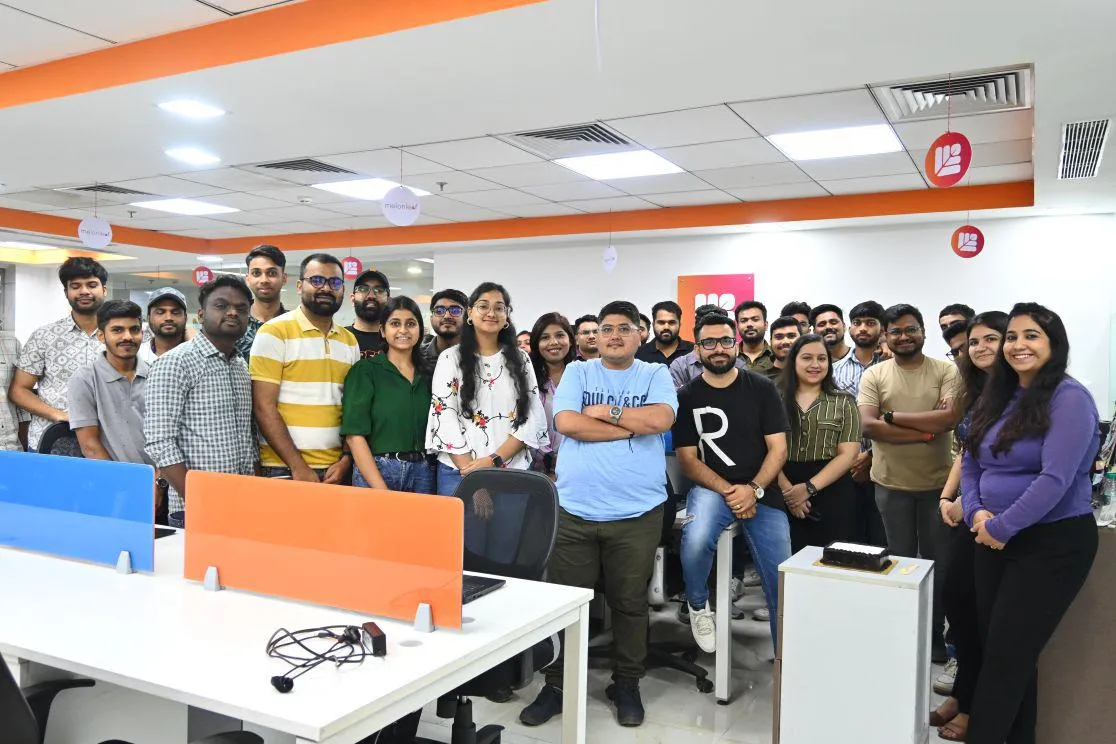
Salesforce architect quits, builds 100-person consultancy in Gurugram
Lalit Arora left an enterprise career in 2020 to sell technology services from Gurugram to buyers he had never met. Melonleaf Consulting now says it employs more than 100 people and has served more than 150 clients.

Lalit Arora spent his career inside large organisations. He worked with Coforge, Blackstone and Deloitte, then Paytm and Pure Software, and with Fortune 500 companies as a Salesforce Technical Architect.
In 2020 he left to start an IT services company of his own in Gurugram.
Melonleaf Consulting opened with a handful of staff and two projects. Arora's account of the founding gives two employees at the start and four at the beginning of trading; the company has not reconciled the two figures.
The more unusual decision was the market. Arora chose to build the business around clients outside India from the outset, rather than serving domestic buyers first.
That meant no established international client base and no large delivery organisation behind the pitch. The team cold-approached prospects and proposed technology solutions.
Then the pandemic shut down business planning across most of those markets. Arora says he kept hiring and kept contacting overseas prospects through it.
Work followed from the United States, Australia, Dubai and Europe, according to the company. By 2021 Melonleaf had an office in Gurugram and a larger technical team.
Arora also changed how the firm bid. Rather than always leading with a proposal, the team would sometimes design a solution or build a small MVP first, then ask for the larger engagement.
It is an expensive way to sell. It is also a credible one when a buyer in Dallas has never heard of your company and cannot check your references locally.
The service line widened with it. Salesforce was the starting expertise; the company now also lists data engineering, cloud, integrations, enterprise applications and AI.
On its own figures, Melonleaf today has more than 100 IT professionals, more than 150 global clients and work across more than 12 industries. The company says it has been profitable from day one.
That profitability claim is the one number Arora puts forward as provable, and he offers the evidence on request rather than publicly. Readers should treat it as the company's own account until accounts are produced.
For founders selling services out of India, the interesting part is not the headcount. It is the sequencing: pick the export market first, accept that you will do unpaid build work to win the first references, and let the working software carry the argument your brand cannot.
The cost of that model is cash. It only survives if the early projects pay for the free ones, which is the claim Melonleaf is making about its first five years.
More: Melonleaf Consulting