Shazam's first chief executive is now building a dyslexia test with his son
Chris Barton once sold song identifications for 50p a time. His new project, run with his 17-year-old son Jude, is about spotting dyslexia.
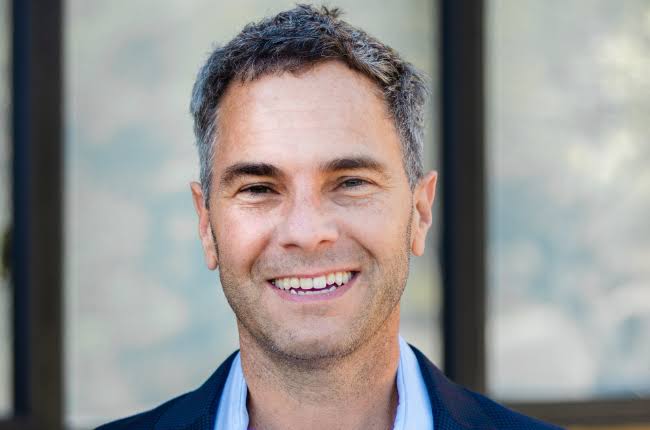
Chris Barton used to choose his university courses by weight.
Before registering at the University of California, Berkeley, he looked up each syllabus and counted the books. Economics appealed because a course generally meant one textbook.
"I can handle that textbook," he recalled thinking, in an interview with Light Watkins. If a question came from chapter four, he knew where to look for the answer.
Years later his son Jude, then in ninth grade, had a book to read and two characters to compare in a short essay. Barton remembers thinking a physics problem would have been easier to help with.
He says he and Jude both have dyslexia. Sitting with the novel, he found himself looking for a way to turn the assignment into a maths problem too.
That instinct built a company once before. At Shazam, Barton's first idea was to log what radio stations played so a listener could look a song up afterwards.
It was no use to anyone who heard a record in a club. So the founders set out to identify a recording from the sound alone.
Co-founder Avery Wang devised an algorithm that could pick a track out through the noise of a phone call. By August 2002 a listener in Britain could dial 2580, hold a mobile up to the music, and get the title and artist back by text for 50p.
Selling it was harder than building it. Shazam paid people to walk into bars and explain the service, and Barton told Tony Robbins that getting the word out cost more than the calls brought in.
The company went through two rounds of redundancies before Apple opened the App Store in July 2008. Shazam was there on day one.
By the time Apple bought it ten years later, the app had passed a billion downloads. The reported price was $400m.
In October, Barton told the Backstage Pass podcast what he and Jude are working on now: dyslexia diagnosis. He had told Experience Milwaukee in June, when Jude was 17, that the two were building a company together.
Spotting a possible difficulty and getting it diagnosed are separate steps. In Britain, the British Dyslexia Association says screening can flag who might benefit from support, while a formal diagnosis requires a qualified assessor.
That gap is the market, and Barton's own schooling is the argument for closing it early. By the time he picked a degree, the length of a reading list was already deciding which subjects he would study.
For founders, the useful part is the method rather than the outcome. Barton did not start with the technology at Shazam; he started with the thing a listener in a loud room actually needed, then went looking for an algorithm that could do it.
He appears to be repeating the sequence, with a reader who cannot get through chapter one in place of the listener.