Coco's robots make 1,000 food deliveries a day in Los Angeles
Two UCLA engineers asked why a 5,000-pound car was moving a five-pound bag of food. Six years on, a Shake Shack regional manager calls their robot his favourite courier.
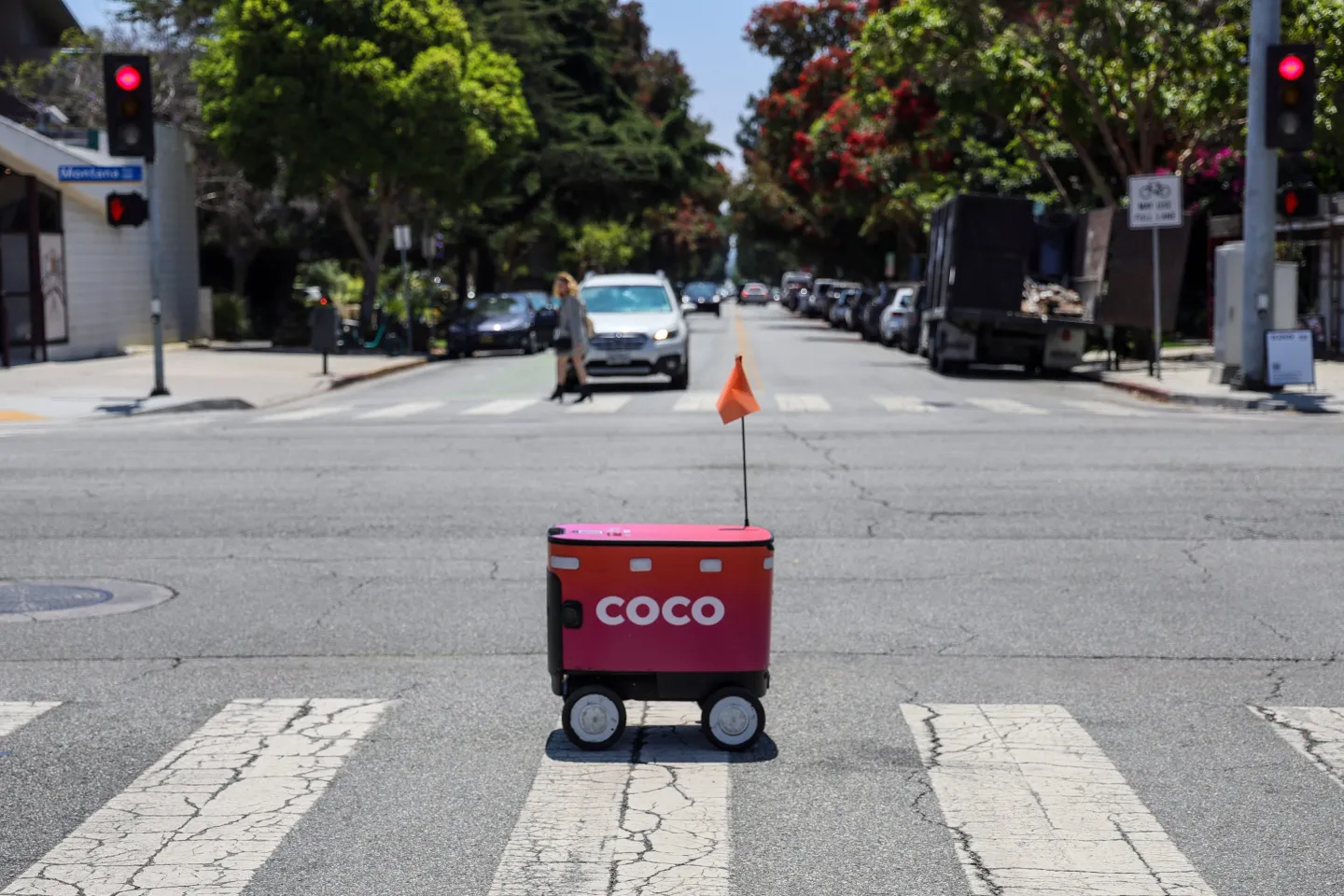
Coco Robotics was founded in 2020 by two UCLA engineers who doubted that cars were the right machine for carrying restaurant orders a few streets.
The observation was a weight ratio. Melissa Fahs, the company's vice president of enterprise partnerships, says the founders looked at the vehicles on the road and asked why a 5,000-pound car was being used to deliver a five-pound bag of food.
They built a vehicle for the job instead: a small pavement robot that carries the order locked inside from kitchen to customer.
Fahs joined after years working with restaurant partners on the economics of third-party delivery. "The last mile is broken," she says. "The cost equation has to change."
On the company's account, the robots are now doing 1,000 deliveries a day in Los Angeles, and have covered more than a million miles and completed more than 500,000 deliveries since launch.
Coco says it works with 4,500 merchants and operates in seven cities. Fahs names Little Caesars, Taco Bell, Shake Shack and White Castle as chains beginning to look at the technology.
The most quotable endorsement came from a Shake Shack regional manager. Fahs says his verdict was: "Coco's our favourite courier."
The pitch to operators is that nothing changes in the kitchen. There is no robot to buy, maintain or clean, and in cities where Coco runs, restaurants can ask Uber Eats or DoorDash to switch the service on.
Fahs says the tip disappears too, because the order goes straight from counter to customer without a driver in between. It also stays at the temperature it left at, she says.
Each city has cost the company something. In Finland, cold weather drained batteries faster and the robots needed studded tyres. Chicago taught the same lesson again.
Miami's rain went further than waterproofing could handle. Fahs says the next model is designed to be submersible so it can cross deep puddles with the food still dry.
Her advice to restaurant operators is to test rather than wait. "You could do one store," she says, and find out whether it fits the operation and the guests.
For a founder, the useful part is the framing. Coco did not start by arguing about autonomy; it started by noticing an absurd ratio between the cargo and the vehicle, then built the smaller machine. The chains followed because adoption cost them a switch on an app they already used, not a purchase order.
More: Coco Robotics