Feather sells a $30,000 humanoid and invites developers to build on it
The startup is not chasing a general-purpose robot brain. It is selling modular hardware at half the price of its nearest Chinese rival and leaving the applications to other people.
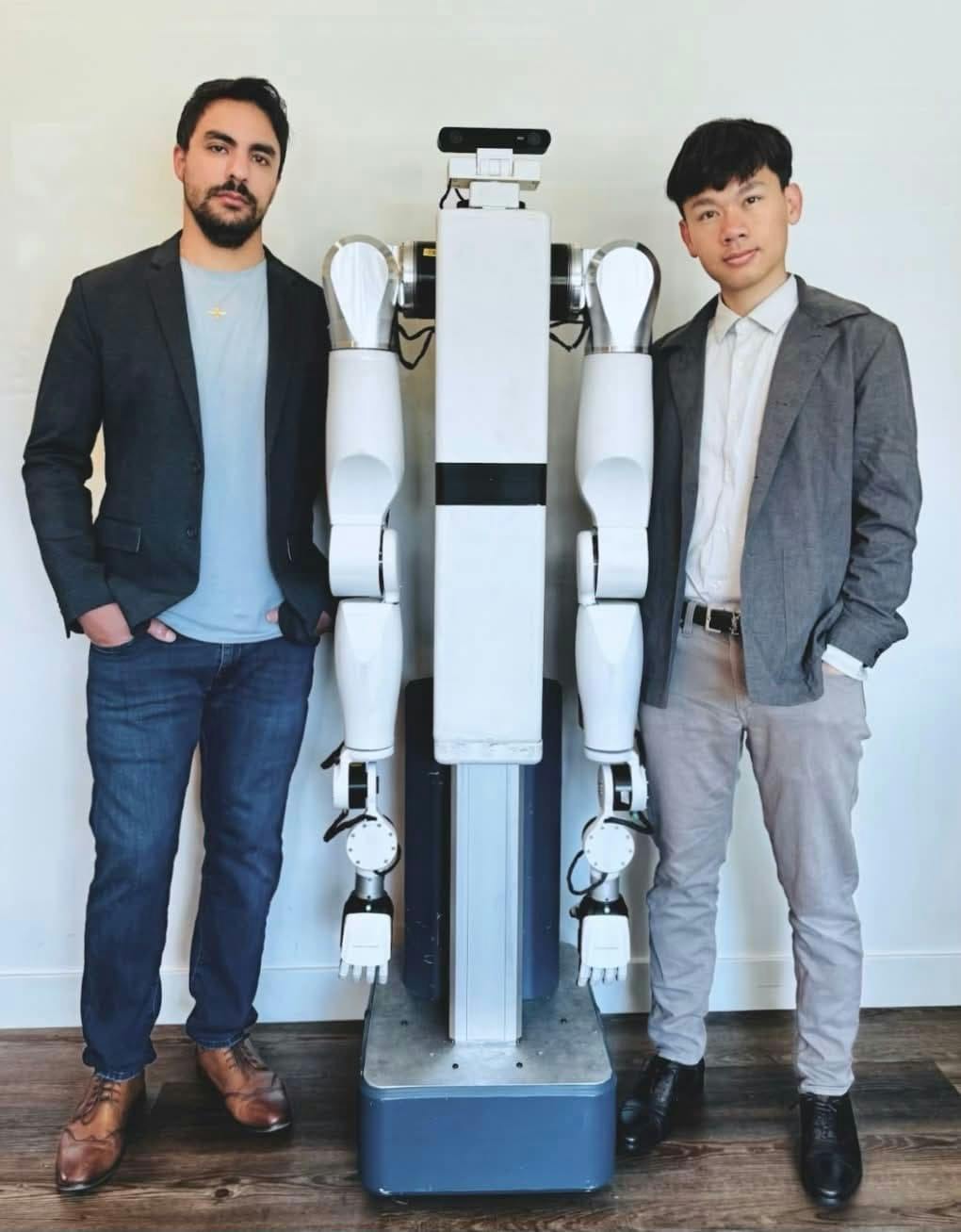
Feather Robotics sells a humanoid robot for $30,000. The pitch is that you write the software.
The company was founded in 2025 by Hoa Mai and Parsa Bakhtiari. Mai's previous humanoid startup was sold to 1X; Bakhtiari worked as an engineer on the Tesla Model 3 and at one point reported directly to Elon Musk.
Gradient Ventures backed the company at inception and led a previously announced $7.6 million pre-seed round.
The hardware is modular. Developers can alter the configuration for different tasks, including adjusting the length of the arms.
On the software side, Feather does not supply the brain. The robot can run models from Nvidia, Skild or Physical Intelligence, among other robotics AI providers.
That is the whole strategic bet. Tesla and Figure are building both the body and a foundation model that is not yet widely deployed; Feather is selling a body that works today and letting others supply the intelligence.
"You can't buy a Tesla robot today and develop on top of it," Mai told TechCrunch. He pointed to Nvidia and Apple as companies that shipped something deployable first and added complexity afterwards.
Feather says it has passed $1 million in revenue. It is not naming customers, but says its robots are working as cooks in restaurants and cleaning up science laboratories.
Mai describes the sales so far as small quantities, following a year of field testing, with a larger product launch being prepared.
The price is the sharp end of the argument. Feather's robot costs about half of Unitree's H2 Edu, and new foreign-made models are restricted from entering the US market, which leaves Feather with a thinner domestic field than it would otherwise face.
Darian Shirazi, the Gradient general partner behind the investment, argues there is no direct US competitor. He splits the field into household robot startups such as Sunday, general-purpose players such as Figure and Tesla, and Feather as the only American firm building a modular humanoid platform.
Shirazi frames the buying decision against wages. A laborer costs $50,000 to $60,000 a year plus training and HR, he said, and a Feather robot is an alternative to that. He also says the company has spent only a fraction of its pre-seed money.
Mai expects the number of physical AI application companies to reach the thousands within five years, from a market he describes as very small today.
For a founder, the number that matters is $30,000 with an open software layer on top. That is roughly the cost of a developer workstation fleet, and it moves robotics from a capital project to a line item — which is precisely the position software companies were in when the app stores opened. Whether the applications materialise is somebody else's problem, and Feather is betting it will be yours.