He Raised $1,500 of His $150,000 Goal. So He Faked the Company
Mike Cessario could not afford to make canned water, so he advertised a product that did not exist. Within months distributors were asking to stock it.
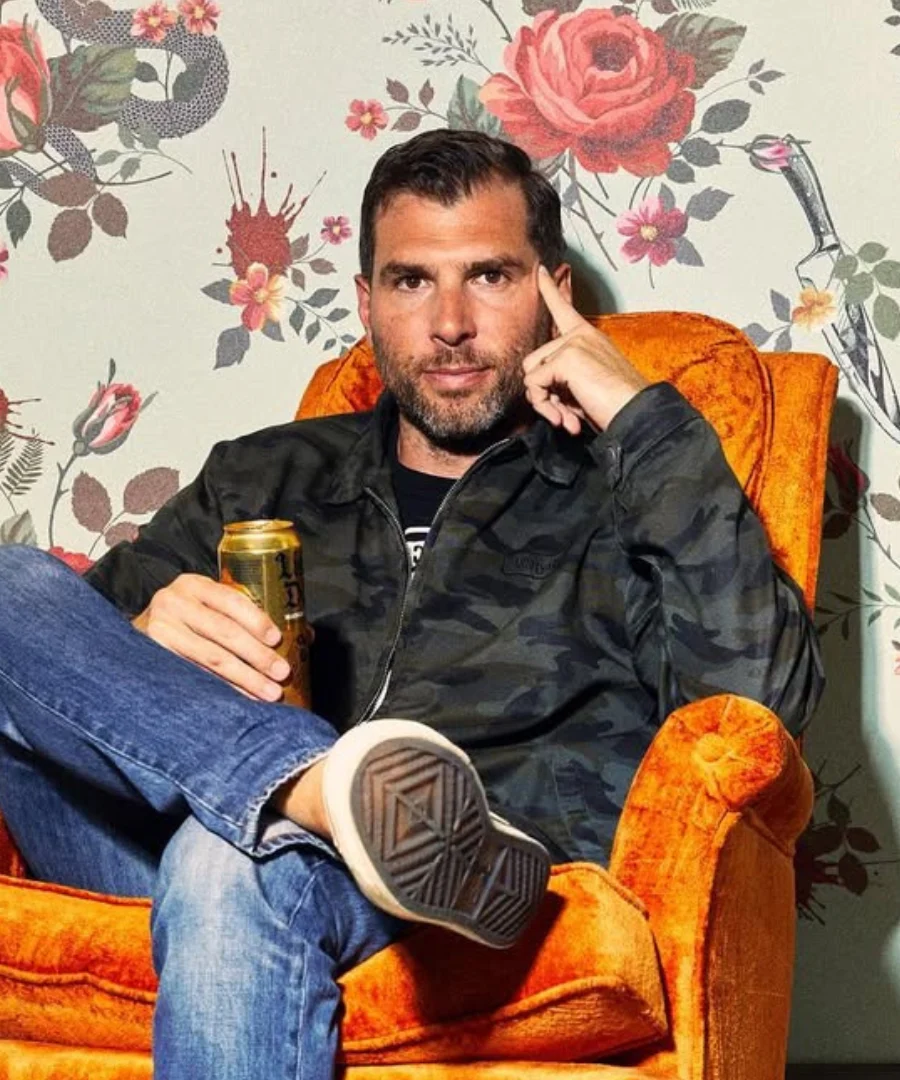
Mike Cessario was not a drinks entrepreneur. He was an advertising creative who had worked at agencies including VaynerMedia and Crispin Porter + Bogusky.
Years before Liquid Death existed, he noticed something odd at events such as the Vans Warped Tour. Performers sponsored by energy-drink companies sometimes wanted water, but still wanted to be seen holding the sponsor's can.
So water went into energy-drink cans. Cessario's conclusion was that water did not have a product problem. It had a branding problem.
Energy drinks looked dangerous. Water looked like water. The idea was to market water like a heavy-metal energy drink, under a suitably ridiculous name.
The problem was manufacturing. The minimum production run for canned water was going to cost roughly $150,000 to $200,000, and investors were not funding an idea for punk-rock water.
"No investor was gonna write me a check for the concept," Cessario later said.
He tried crowdfunding first. The target was $150,000. He raised about $1,500, or one per cent of it.
By the usual reading, that is a market telling a founder to stop. Cessario instead concluded he had tested the wrong thing, and went looking for another way to prove demand.
So he pretended the company already existed. He Photoshopped a realistic-looking can and spent about $1,500 making a commercial.
There was no prototype to film. For one shot, where a woman pours Liquid Death over someone, the crew used a white Miller Lite can, angled so the viewer could not see what it was.
Then he built a Facebook page and ran it as though Liquid Death were a going concern, spending roughly another $5,000 to $6,000 promoting it over several months.
The advert reached nearly three million video views and almost 80,000 Facebook followers, more than Aquafina had, before a single can had been sold.
The messages that followed were not only from drinkers asking where to buy it. One came from a self-described major New York distributor asking to speak to a salesperson. Another came from a man who said he owned three 7-Eleven stores in Michigan and wanted to stock it.
There was no salesperson, no inventory and no Liquid Death.
That evidence did what the concept alone could not. Cessario raised roughly $150,000 from friends, former agency bosses and other early believers, and the first real cans went on sale online in early 2019.
The lesson for a founder short of capital is narrow and useful. The crowdfunding page said nobody wanted it; the Facebook page said 80,000 people did, and the difference was not the idea but what was being tested.
Cessario could not afford the $150,000 needed to test the product. So he spent $1,500 testing the demand instead.