Eighth business, 5,000 pairs, half of them his own size
Greg Taylor was 37, broke and on a friend's couch when he ordered a container of underwear on a maxed-out credit card. Four years later Step One listed in Sydney.
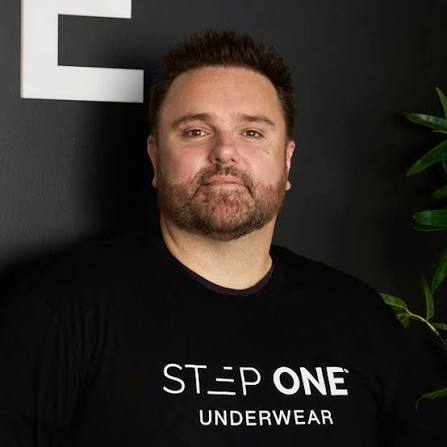
Greg Taylor spent close to two decades failing to become an entrepreneur. Seven businesses, by his own count.
The first was an online reverse auction for cars, launched in 2005. Buyers named the car they wanted and dealers bid for them.
The press coverage was heavy enough to crash the website. The business still did not work.
After that came advertising on coffee cups, an online loyalty-card service that signed up hundreds of thousands of users, and an app for paying bar tabs. Each one got somewhere. None got far enough.
By his late thirties Taylor had roughly £400 left and was sleeping on a friend's couch, weighing up a job and a move back to his parents' house.
Then he went hiking in New Zealand. Years of rowing for Australia had left him with thighs that chafed, so he walked in cycling shorts under his hiking shorts.
It was uncomfortable, and it prompted an obvious question. Men spend heavily on technical shoes and jackets, and almost nothing has changed in the garment against their skin all day.
He looked for underwear that fixed the chafing and could not find any. Business number eight would be underpants.
Previous backers declined. So did friends and family. One billionaire he knew put the chance of success at under half of one percent.
Taylor flew to the Canton Fair with no brand, no design and no tech pack, and asked a factory representative what a tech pack was. When he said he wanted 5,000 pairs, factories assumed he meant a test run. He meant the whole order.
He eventually found a manufacturer, then cut up his cycling shorts and worked through around 25 iterations, trying samples on in the factory's sample room until the friction stopped.
He maxed out a $10,000 credit card to pay for the run. Roughly half of it was XL, which is his size, on the reasoning that a failed business would at least leave him well supplied.
That left about $1,500 for marketing. He made a Facebook video, appeared in it wearing a panda suit, and it reached around a million views.
The first 5,000 pairs sold. He reinvested in 20,000 more, which he says went in 17 minutes.
Taylor says revenue climbed to about $1.5m, then $10m, then $20m, and stood at roughly $60m a year by 2021, around four years after launch. He ran the advertising, photography, customer service and dispatch himself at the start, from a bedroom and a small office.
In November 2021 Step One listed on the Australian Securities Exchange, raising about A$81m at a valuation approaching A$300m. Taylor was the sole shareholder going in; there were no early venture investors on the podium.
The useful part for anyone reading is not the valuation. It is that seven attempts taught him how to sell, how to advertise and how ecommerce actually behaves, and the eighth needed only to solve one specific problem better than anyone else had bothered to.
More: Step One